Protein helps you stay full, keep muscle, and feel better while losing fat. Here’s how to set daily and per‑meal targets with normal foods and a sane budget.
Education only, not medical advice. If you have kidney disease or other conditions, speak to a qualified clinician about suitable protein intake.
Key points
- Protein supports fullness and preserves muscle during a calorie deficit, helping you look and feel better as weight drops.
- Many active adults aiming for fat loss do well with a higher‑protein pattern spread across meals.
- You don’t have to eat meat; plant‑forward diets can hit targets with smart combinations and a bit of planning.
- Food first; supplements like whey are optional for convenience rather than a requirement.
Why protein matters for fat loss
Protein is the most filling macronutrient per calorie; it also provides the building blocks your body needs to maintain lean tissue while you lose fat. That matters because lean tissue helps you move well, train safely, and keep your resting energy use higher than it would be with extreme dieting. People who keep protein steady typically report fewer cravings, more stable energy, and better workout recovery.
Practically, anchoring each meal with a protein source nudges the rest of your choices in the right direction: vegetables and fruit fit more easily on the plate, and you can add carbs and fats to taste without losing control of calories.
How much protein per day?
Exact needs depend on size, training, age, and goals. For adults pursuing fat loss with some strength or activity, many coaches use ranges like the following as starting points. Adjust with your clinician if you have medical conditions or unique needs.
| Context | Common daily range | Notes |
|---|---|---|
| General adult, light activity | ~1.2–1.6 g/kg body weight | Distribute across 2–4 meals. |
| Active / strength training | ~1.6–2.2 g/kg | Higher end can aid muscle retention in a deficit. |
| Higher body weight using target weight | ~1.6–2.2 g/kg of goal weight | Using goal weight can be simpler than current weight. |
If you prefer pounds, 0.6–1.0 g per lb (of goal or lean body weight) covers most active adults. You don’t need to be perfect—aim for a solid portion at each meal and adjust based on fullness, energy, and results.
Per‑meal goals & distribution
Your body can use protein throughout the day. Splitting intake across meals tends to support fullness and recovery better than cramming it all at night. Many people use one of these simple patterns:
2 meals/day
~35–50 g per meal + a snack if needed.
3 meals/day
~25–40 g per meal (common and flexible).
4 meals/day
~20–35 g per meal (smaller, frequent meals).
Signals you’re in a good zone: fewer cravings, better workout recovery, and easier calorie control without feeling deprived.
Best sources (animal & plant)
Animal‑based
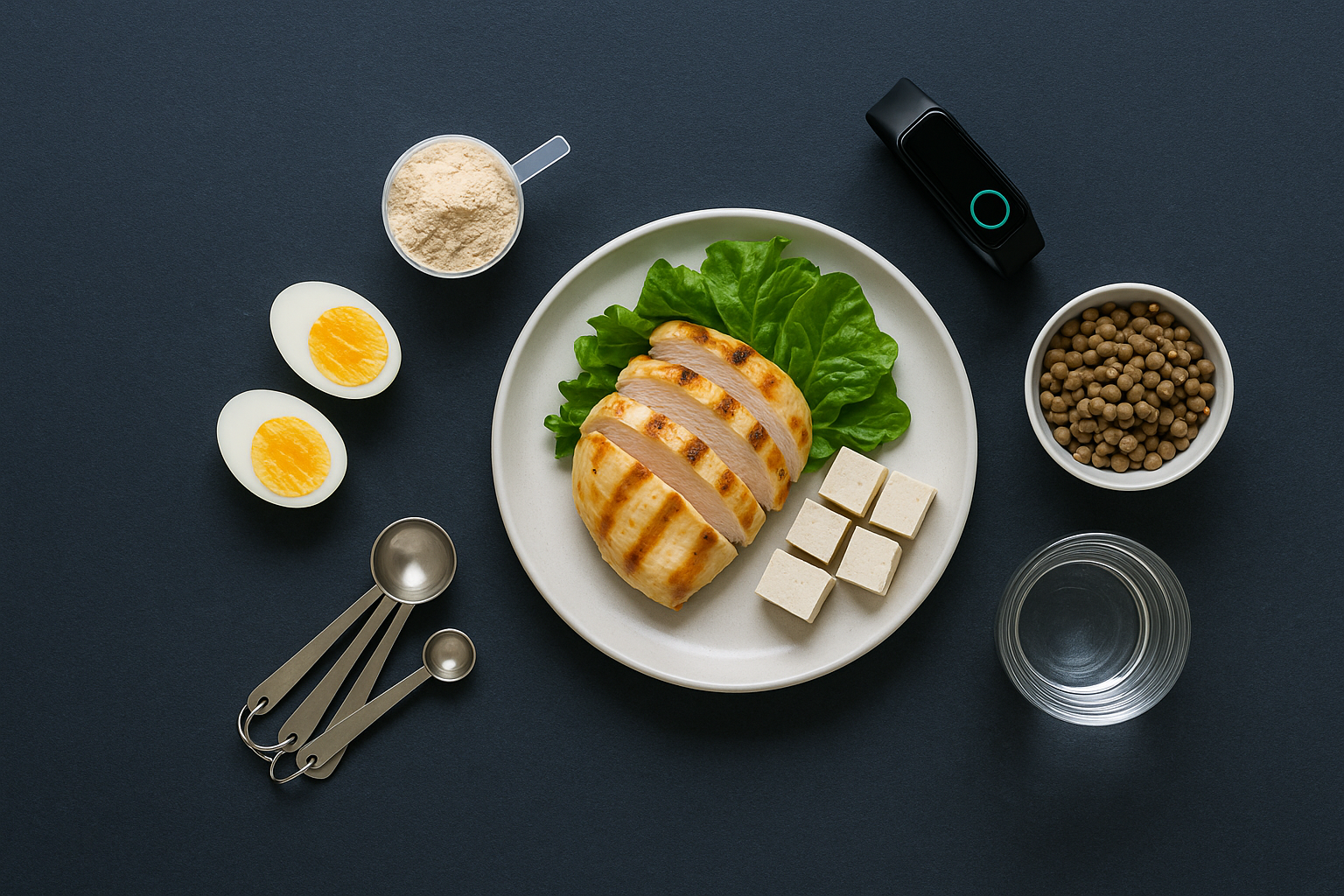
- Eggs and egg whites
- Fish (tuna, salmon, sardines), shellfish
- Poultry (chicken, turkey), lean beef or lamb
- Greek yogurt, skyr, cottage cheese, milk
- Whey/casein protein (convenience)
Plant‑based
- Tofu, tempeh, edamame
- Lentils, chickpeas, beans
- Pea/soy protein shakes or soy yogurt
- Whole‑grain combos: rice + beans, pita + hummus
- Nuts and seeds (watch portions—more fat‑dense)
Protein quality? Animal sources are typically “complete”; plant sources can reach similar outcomes by combining different foods across the day (e.g., legumes + grains) and by eating enough total protein.
Budget & convenience picks
Low‑cost staples
- Eggs, canned tuna/sardines/mackerel
- Dry beans and lentils
- Frozen chicken or fish fillets
- Greek yogurt tubs, cottage cheese
Convenience options
- Pre‑cooked rotisserie chicken (skin off)
- Ready tofu/tempeh packs
- Protein shakes for busy days
- Low‑sugar skyr cups
Flavor boosters
- Spice mixes, garlic, lemon
- Yogurt‑herb sauces
- Salsa, mustard
- Vinegar + olive oil
Sample high‑protein day (omnivore & plant‑forward)
Omnivore example
- Breakfast: Greek yogurt + oats + berries.
- Lunch: Chicken salad bowl with rice/potato.
- Snack: Cottage cheese + fruit or a whey shake.
- Dinner: Fish or lean beef + 2 veggies + smart carbs.
Plant‑forward example
- Breakfast: Soy yogurt + granola + fruit.
- Lunch: Lentil salad with olive oil + vinegar.
- Snack: Pea/soy protein shake + banana.
- Dinner: Tofu/tempeh stir‑fry + rice + veggies.
Adjust portions to your appetite and activity. The goal is steady energy, good recovery, and satiety—not hitting an exact number every day.
Troubleshooting & myths
“High protein is bad for kidneys.”
For healthy people, higher‑protein diets are commonly used in fat‑loss plans. If you have kidney disease or other medical conditions, get personal guidance from a clinician.
“Protein makes you bulky.”
Muscle growth requires progressive strength training and enough calories. In a deficit, protein mainly helps you keep muscle, not gain large amounts.
“I’m always hungry.”
Add or increase a protein portion and pair it with fiber (veggies/fruit/legumes). Consider shifting some calories earlier in the day if evenings trigger overeating.
“I feel too full.”
Choose lighter proteins (fish, egg whites, yogurt), reduce portion slightly, or spread intake across more meals.
“Protein is expensive.”
Use budget picks (eggs, cans, dried legumes, frozen fillets) and buy bulk family packs to portion and freeze.
FAQs
Do I need protein powder?
No. Food first. Shakes are useful when you’re traveling or short on time.
Is timing important?
Distribute protein through the day. A post‑workout meal is helpful but doesn’t have to be immediate.
Can I hit targets as a vegetarian/vegan?
Yes—with soy/pea proteins, tofu/tempeh, legumes, and whole‑grain combos. Plan portions and include a protein source at every meal.
What if weight isn’t dropping?
Hold protein steady and adjust total calories via portion levers (oils, sugary drinks, desserts). Also check steps, sleep, and weekends.