Snoring is common; sleep apnea is a medical condition with breathing pauses and low oxygen. This guide helps you spot warning signs and know when to get evaluated.
Education only, not medical advice. If you have severe daytime sleepiness or doze while driving, seek urgent evaluation.
Key points
- Snoring is vibration noise in the upper airway; it’s not always dangerous.
- Obstructive sleep apnea (OSA) involves repeated breathing pauses, oxygen drops, and sleep fragmentation that strain the heart, brain, and metabolism.
- Red flags include loud habitual snoring, witnessed pauses/gasping, morning headaches, marked daytime sleepiness, and resistant high blood pressure.
- A sleep evaluation (home test or lab study) can clarify what’s happening and guide treatment.
Snoring vs obstructive sleep apnea
Snoring
- Sound from soft tissues vibrating as air passes.
- Worse with nasal congestion, back‑sleeping, alcohol, or fatigue.
- Annoying but not always harmful.
Obstructive sleep apnea
- Airflow stops or reduces despite effort (partial/complete blockage).
- Causes oxygen dips and repeated arousals from sleep.
- Linked to daytime sleepiness, headaches, high blood pressure, and accident risk.
Some people move along a spectrum—from simple snoring to “upper airway resistance” to clear OSA. Only testing can confirm where you land.
Warning signs to take seriously
- Loud, chronic snoring most nights
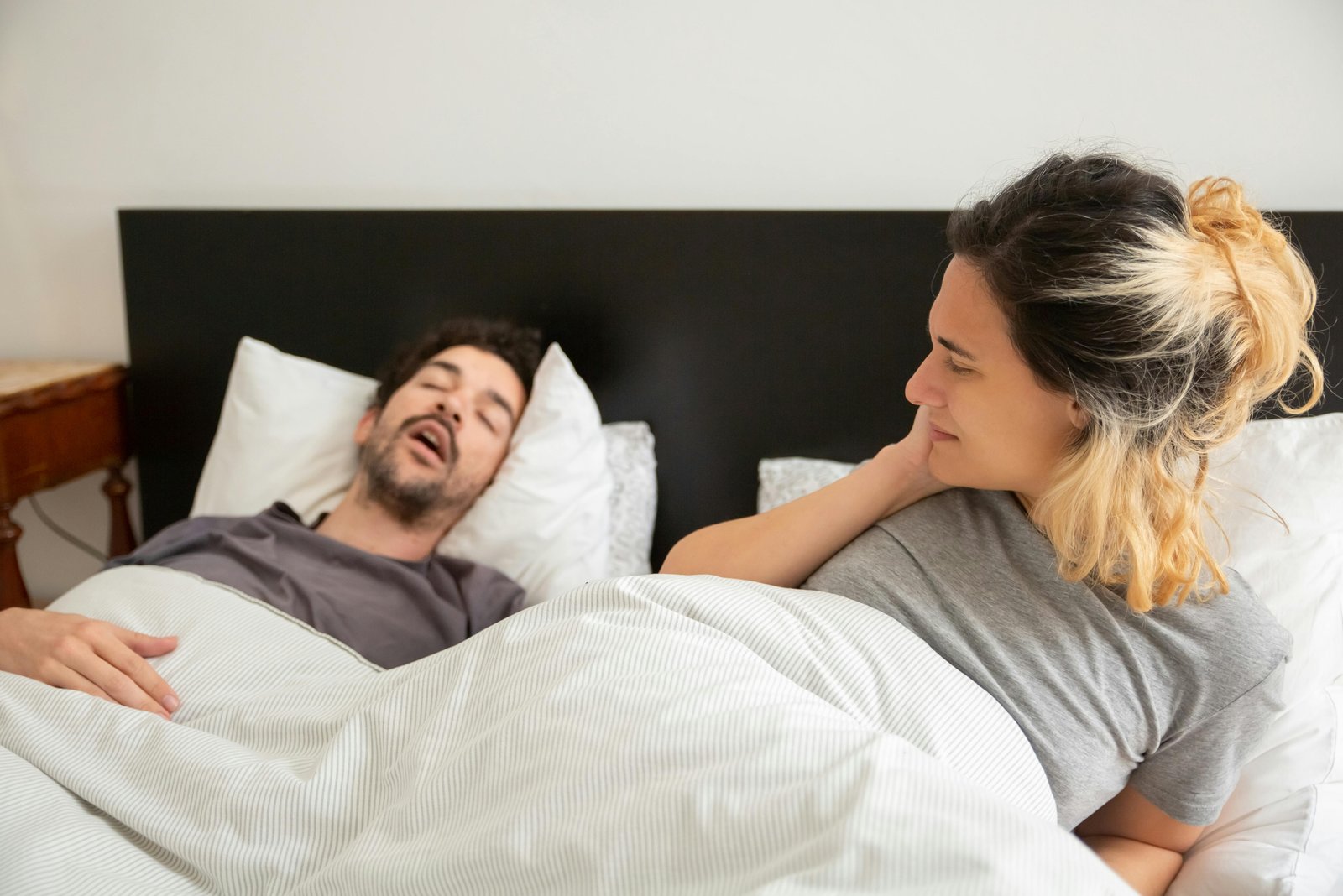
- Witnessed pauses, gasping, or choking during sleep
- Morning headaches or dry mouth
- Excessive daytime sleepiness; dozing at meetings or while driving
- Resistant high blood pressure, heart rhythm issues, or type 2 diabetes
- Restless, unrefreshing sleep despite “enough hours”
At‑home checks (non‑diagnostic)
Listen or record
Ask a partner about pauses/gasps or use a simple overnight audio recording app. Not a diagnosis—just a clue.
Side‑sleep test
If snoring or pauses drop on your side vs your back, positional OSA may be part of the picture.
Daytime sleepiness
Notice if you fight sleep during passive activities. Severe sleepiness + snoring/pauses warrants evaluation.
Online questionnaires exist but don’t replace medical assessment. If in doubt, get checked.
When to seek care
- Snoring with breath pauses, gasping, or choking
- Severe daytime sleepiness or near‑misses/accidents
- Morning headaches, resistant high blood pressure, or heart rhythm concerns
- Snoring in a child with behavior or learning issues, bedwetting, or growth concerns
Start with a primary‑care clinician or a sleep specialist. They may order a home sleep apnea test or an overnight lab study.
Diagnosis & treatment paths (overview)
Testing
Home tests measure breathing and oxygen; lab studies add brain waves and leg movements to classify sleep stages and other disorders.
CPAP/APAP
Gently pressurized air prevents airway collapse and is highly effective for many with OSA.
Oral appliances
Custom mouthpieces move the jaw forward to keep the airway open—useful in mild–moderate cases.
Positional therapy
Devices, pillows, or simple cues encourage side‑sleeping if apnea worsens on the back.
Habits
Reduce late alcohol/sedatives, keep a steady schedule, address nasal congestion, and pursue weight management if recommended.
Procedures
In selected cases, surgical options or nerve‑stimulation therapies may be discussed by specialists.
Children & teens
Snoring is less common in kids. Loud nightly snoring, pauses, bedwetting, behavior or attention issues, or growth concerns deserve evaluation. Enlarged tonsils/adenoids are a frequent contributor; treatment is individualized by a pediatric clinician.
FAQs
Is snoring always dangerous?
No. Many people snore without apnea. Red flags include pauses, gasps, morning headaches, and daytime sleepiness—get checked if present.
Can weight loss help?
For some adults with OSA, reducing weight can lessen severity. That said, people of all sizes can have apnea; don’t delay evaluation.
Are nasal strips enough?
They may reduce simple snoring from nasal congestion but won’t treat apnea. If pauses occur, seek medical advice.
Home test or lab study?
Clinicians choose based on your history and risks. Home tests are convenient; labs capture more detail when needed.