The Jewish New Year (5786): Dates, meaning, and beginner-friendly customs—shofar blasts, “Shanah Tovah” greetings, and the sweet symbols that set the tone for the year.
Rosh Hashanah 2025: Dates at a glance
Source: community calendar listings (Hebcal, Chabad). Jewish holidays begin at sundown and conclude at nightfall.
What the holiday marks
Rosh Hashanah opens the Yamim Nora’im (Days of Awe)—a reflective ten-day period leading to Yom Kippur. Services emphasize God’s sovereignty, renewal, and personal accounting, setting a hopeful yet serious tone for the new year.
Shofar: sound, patterns, and who blows it
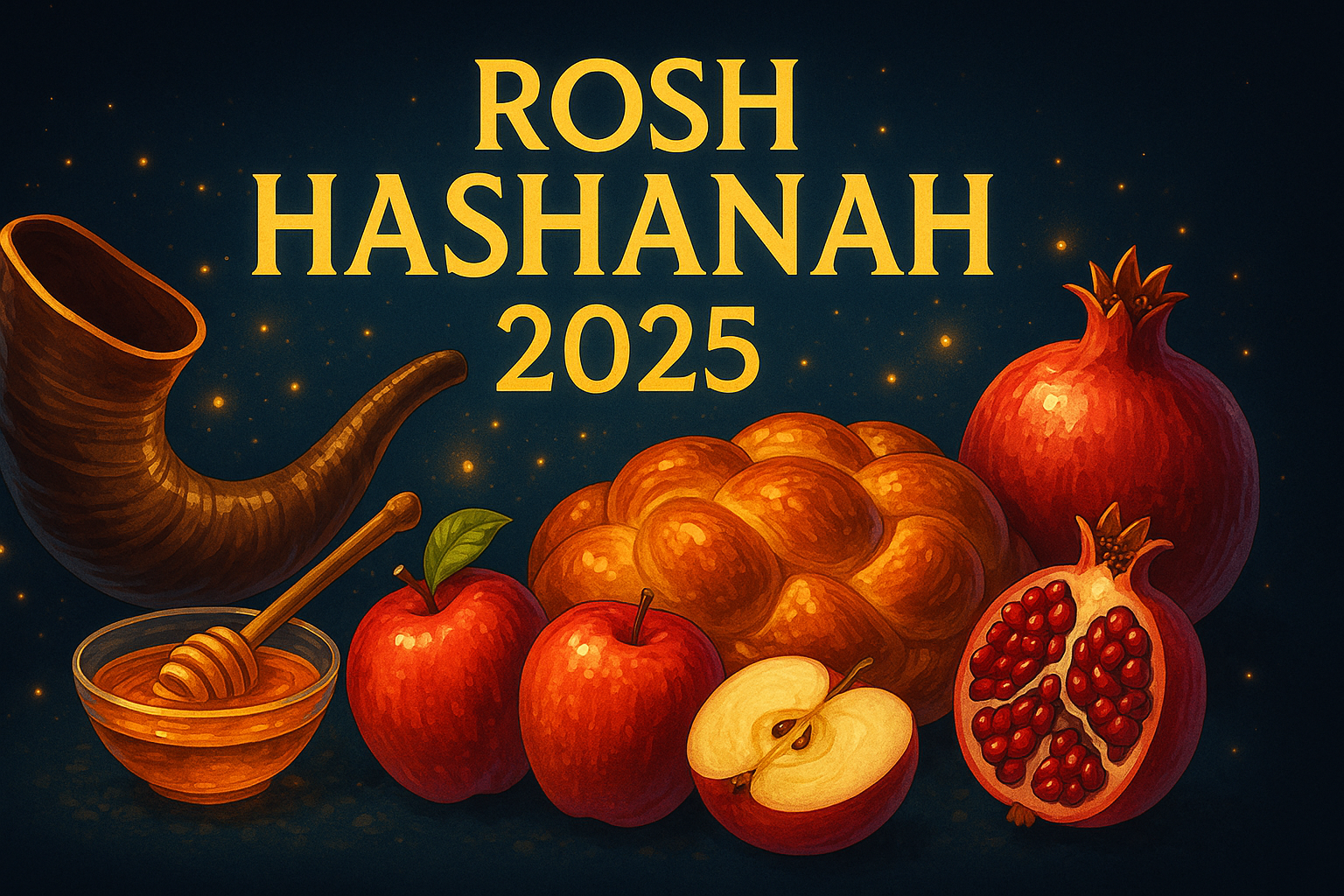
- Instrument: a ram’s horn with a raw, ancient timbre.
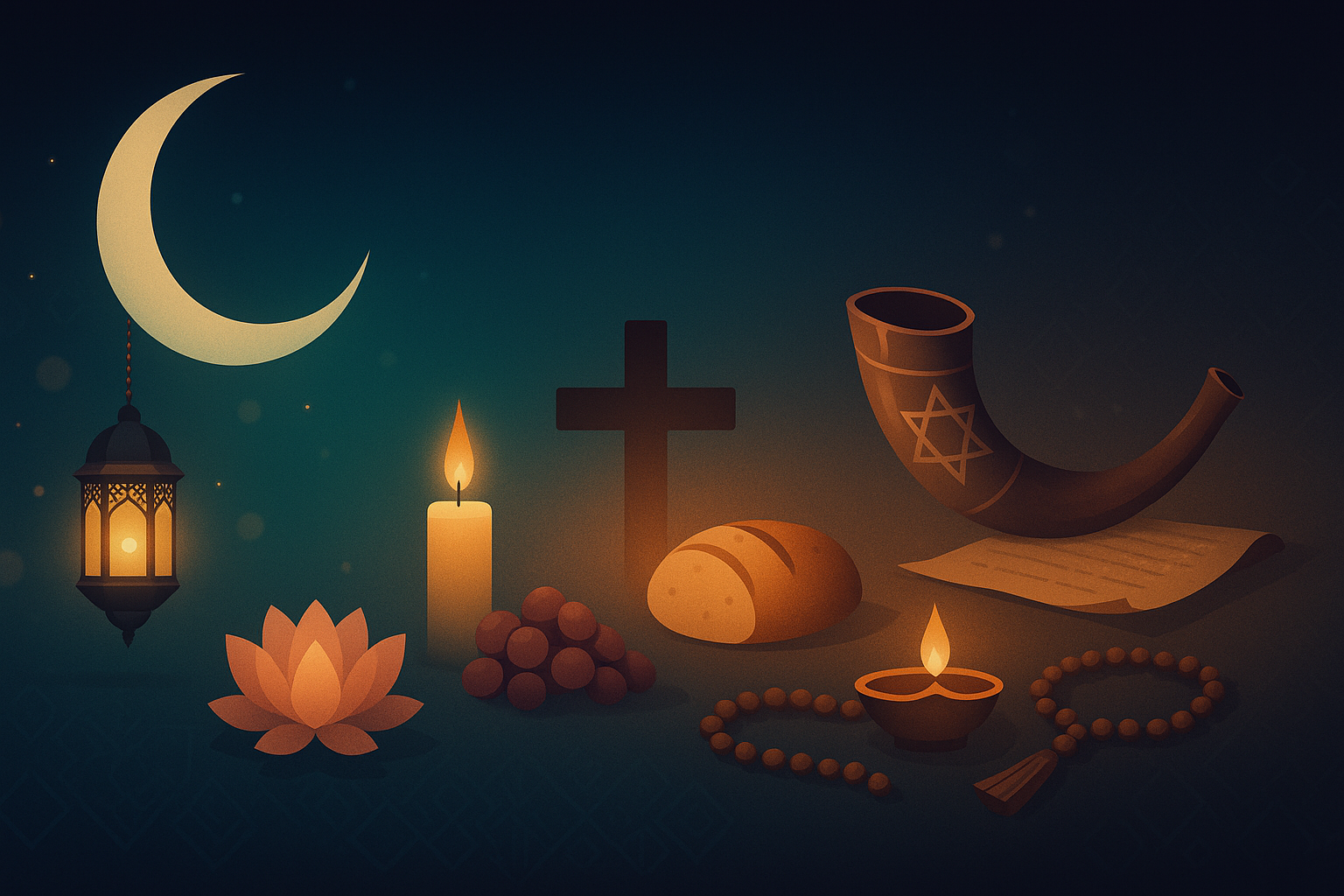
- Classic sounds: Tekiah (long), Shevarim (broken triplet), Teruah (staccato), and the climactic Tekiah Gedolah (extended).
- Where heard: in synagogue on both days (except when the first day falls on Shabbat).
- Why it matters: The blasts awaken the spirit, calling people to reflection and return.
How to greet people
- “Shanah Tovah” (שנה טובה) — “A good year!”
- “Shanah Tovah U’Metukah” — “A good & sweet year.”
- “L’Shanah Tovah Tikateivu (v’Teichateimu)” — “May you be inscribed (and sealed) for a good year.”
Keep it simple in English if you prefer—“Happy New Year” is welcome too.
Symbolic foods (simanim)
- Apples & honey: praying for a sweet year.
- Round challah: the cycle of time; often studded with raisins for extra sweetness.
- Pomegranate: abundance and merit (its many seeds are emblematic).
- Fish head (or head of lettuce): “May we be as the head and not the tail.”
- Carrots, dates, beets, leeks, squash: various word-plays of blessing in different traditions.
Other common practices
- Candle-lighting: Holiday candles are lit both evenings; many communities recite special holiday blessings.
- Tashlich: Casting breadcrumbs or small pieces into flowing water as a physical symbol of casting away sins (usually first afternoon; varies by local custom).
- Prayer themes: Kingship (Malchuyot), Remembrance (Zichronot), and Shofar (Shofarot).
Rosh Hashanah FAQs
How strict is work restriction?
Rosh Hashanah is a major holiday; traditional practice refrains from work similar to Shabbat. Many businesses close; specific observance varies by community.
Do I need to know Hebrew to attend services?
No—most synagogues provide translations/transliterations and guidance. Many offer beginner-friendly services.
What should I wear or bring?
Dress respectfully (business-casual or nicer). Bringing a small donation for the community or food pantry is always appreciated.
Tip: Double-check local candle-lighting times via your synagogue or a reputable calendar in your time zone.