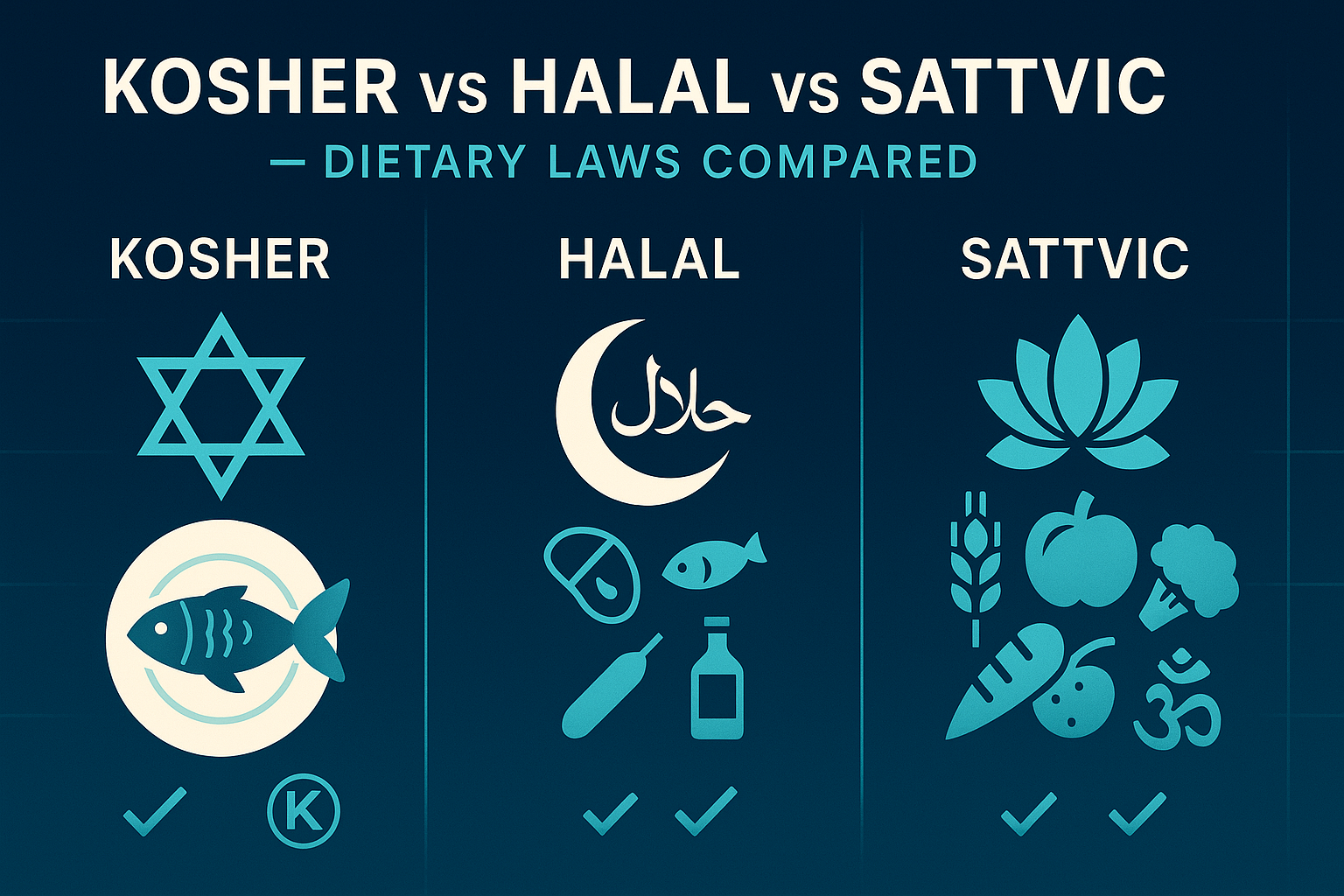
At a glance
Kosher is a binding religious law for Jews; Halal is a binding religious law for Muslims; Sattvic is a voluntary ideal in Hindu and yogic practice emphasizing purity, simplicity, and mental clarity. While there are overlaps (e.g., concern for how animals are treated or slaughtered), details differ: seafood rules, meat–dairy separation, alcohol, onions/garlic, and certification.
Side-by-side comparison
Source & scope
Kosher
From Torah & rabbinic law; binding for observant Jews. Applies to ingredients, prep, kitchens, and equipment.
Halal
From Qur’an & Sunnah; binding for observant Muslims. Covers ingredients, slaughter, alcohol, contamination.
Sattvic
Ayurvedic/yogic ideal; not a legal code. Encourages fresh, light, non-irritating foods that support meditation.
Core aims
Kosher
Holiness, separation (kashrut), ethical mindfulness; sanctifying daily life.
Halal
Permissibility (halal) and purity (tayyib); gratitude, restraint, compassion.
Sattvic
Clarity, balance, non-harm; reduce tamasic/rajasic qualities (sluggishness/agitation).
Allowed basics
Kosher
Land animals with split hooves & chewing cud; fins-and-scales fish; specific birds; plant foods; dairy with rules.
Halal
All lawful animals except explicit prohibitions; seafood generally permitted (schools differ on details); plant foods.
Sattvic
Vegetarian emphasis for many; fresh grains, legumes, fruits, vegetables; dairy often included; nuts/seeds.
Avoids
Kosher
Pork, shellfish, insects; mixing meat & dairy; non-kosher slaughter; blood.
Halal
Pork; carrion; blood; intoxicants (alcohol); animals not slaughtered properly or in God’s name.
Sattvic
Heavily processed, stale, overly spicy, stimulants; many avoid eggs, onions/garlic (rajasic), caffeine/alcohol.
Animal slaughter
Kosher
Shechita by trained shochet; swift cut; animal must be healthy; extensive inspection & blood removal.
Halal
Dhabiha; God’s name invoked; swift cut; animal healthy; blood drained. Stunning permissibility varies by jurisdiction/scholars.
Sattvic
Often vegetarian; meat generally avoided in stricter sattvic practice.
Alcohol
Kosher
Permitted if produced kosher (e.g., wine with supervision). Non-kosher wine not allowed.
Halal
Intoxicants prohibited; alcohol in ingredients/extracts is generally not allowed (opinions vary on trace residues).
Sattvic
Avoided; viewed as tamasic (dulling).
Seafood
Kosher
Must have fins & visible scales; shellfish not kosher.
Halal
Generally permitted; some schools restrict certain aquatic life.
Sattvic
Usually avoided with a vegetarian leaning.
Dairy / combinations
Kosher
Meat and dairy may not mix; separate utensils & wait times. “Pareve” = neutral.
Halal
No meat–dairy separation rule; dairy must be halal-compliant (e.g., enzymes/gelatin sources).
Sattvic
Dairy (esp. milk, ghee) embraced by many; combinations chosen for digestibility.
Utensils & kitchens
Kosher
Separate sets for meat/dairy; kashering rules; certification for shared facilities.
Halal
Avoid cross-contamination with non-halal (pork/alcohol); cleanliness emphasized; certification for production lines.
Sattvic
Clean, simple prep; avoid leftover/stale foods; preference for fresh, home-cooked.
Certification
Kosher
Look for symbols (e.g., OU, OK, Star-K, etc.). Local rabbinate/agency may supervise restaurants & factories.
Halal
Look for halal marks from recognized bodies; verify slaughter method and alcohol handling where relevant.
Sattvic
No universal seal; some brands label “sattvic/ahimsa/ Jain-friendly.” Read ingredients and processing notes.
Vegetarian / vegan fit
Kosher
“Pareve” can be vegan but check for fish/egg/ honey. Separate meat/dairy simplifies vegetarian hosting.
Halal
Vegetarian/vegan often halal by default; watch for alcohol/gelatin/enzymes.
Sattvic
Often vegetarian; many also avoid eggs/onion/garlic; vegan possible with ghee/milk alternatives.
Practical hosting tips (everyone eats!)
- Ask first. Observance levels vary widely; a quick message avoids guesswork.
- Keep it simple. Vegetarian mains + clearly labeled sides satisfy most needs.
- Watch hidden ingredients. Gelatin, rennet, alcohol-based extracts, stocks, oyster sauce, lard, and shared fryers are common pitfalls.
- Separate stations. Distinct utensils/serving spoons prevent cross-contact.
- Package proof helps. Save labels or show certification if you have it.
FAQs
Is Kosher automatically Halal (or vice-versa)?
No. There is overlap (e.g., pork forbidden), but slaughter methods, blessing requirements, alcohol rules, and seafood differ. Ask the person or check certification.
Is Sattvic the same as vegetarian?
Not exactly. Many sattvic diets are vegetarian, but they also emphasize freshness and often avoid onion/garlic, eggs, alcohol, caffeine, and very spicy/heavy foods.
What about gelatin, enzymes, and flavorings?
These are frequent gray areas. Kosher and halal certification addresses source and processing; sattvic eaters typically avoid animal gelatin and harsh additives. When in doubt, choose certified products or plant-based alternatives (pectin/agar; microbial rennet; alcohol-free flavorings).
Note: Communities and authorities differ. For strict observance, consult a local rabbi, imam, or guru/tradition leader and follow medical advice for health-related needs.